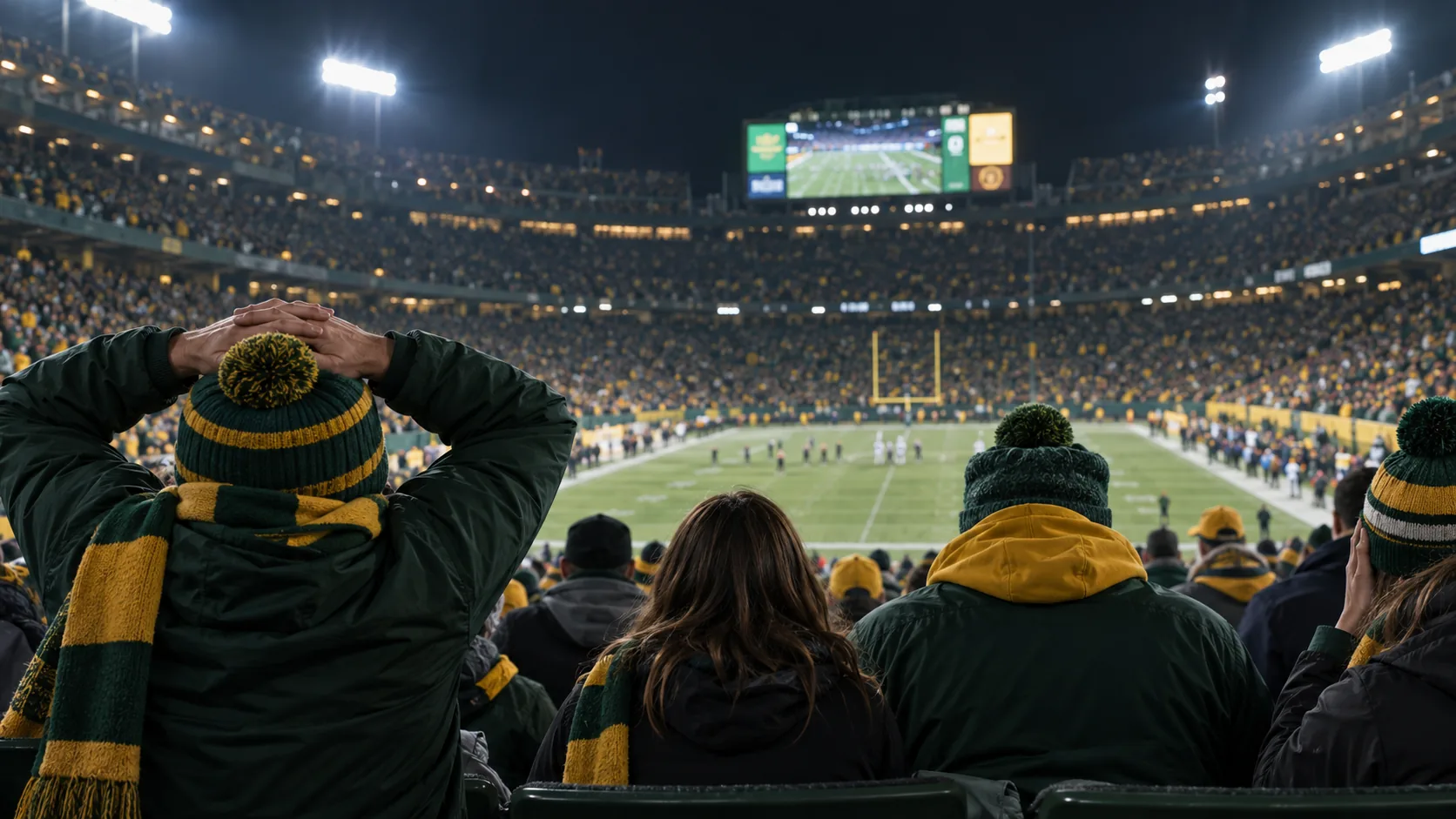
Some spectators booed the Green Bay Packers during their 35–14 home-opening loss to the Atlanta Falcons on September 24, after an early lead turned into a long scoring drought and a one-sided second half. Tucker Kraft said hearing boos at Lambeau Field was disappointing and would not help the team win. His response then sparked a second debate about what paying fans are entitled to express and what players owe them after a poor performance. The verified game record gives a clearer starting point than either extreme: Green Bay led 7–0, allowed 27 consecutive Atlanta points and finished with only 17 rushing yards. This September 26 account separates the game's events, reported player comments and a small sample of online reactions; it does not claim every Packers fan booed or agreed on why.
When did the boos start, and what was happening on the field?
The sound from the stands was part of a Thursday night home opener that did not go as Green Bay expected. The Los Angeles Times reported that boos became audible late in the first half, with the Packers trailing 17–7, and grew as the game worsened. That is a reporter's observation of a crowd, not a count of how many people joined in. The football sequence, however, is clear from Green Bay's own play-by-play: a promising opening score was followed by stalled drives, missed chances and an Atlanta surge.
From a 7–0 lead to a 17–7 halftime deficit
Green Bay's first touchdown came on a Jordan Love pass to Christian Watson with just over five minutes left in the first quarter. The Packers led 7–0. Atlanta responded with Bijan Robinson's short touchdown run, and the game was tied after one period. A close score early did not mean the offenses were operating equally well. The Packers' own postgame analysis says their offense went three-and-out four times in the first half after the opening touchdown drive.
Atlanta moved ahead on a field goal, while Green Bay lost a chance to tie it when a 47-yard field-goal attempt was blocked. The Falcons then scored before halftime to lead 17–7. That combination helps explain why the boos were reported before the game became a blowout. Supporters were watching a home opener in which an early lead had slipped away and the offense repeatedly failed to stay on the field. It is still an inference to say any one spectator booed for that exact reason. The timeline supports the wider conclusion that the reaction did not begin solely at the final whistle or after the score reached 35–14.
Why the second half made the reaction louder
Green Bay had a route back into the game to start the third quarter. The offense drove deep into Atlanta territory while down 17–7, then failed on fourth-and-1 near the goal line. The Falcons followed with another touchdown to push the lead to 24–7. Early in the fourth, an Atlanta field goal made it 27–7. That stretch completed 27 unanswered Falcons points after Green Bay's initial 7–0 lead. A late Love touchdown pass to Matthew Golden cut the deficit to 27–14, but Robinson scored again and Atlanta finished with a 21-point win.
| Game point | Verified score or event | Why it mattered to the crowd story |
|---|---|---|
| First quarter | Watson touchdown, Packers ahead 7–0 | The home opener began with a reason to cheer. |
| Late first half | Atlanta led 17–7; reporter noted boos | Repeated stalled drives changed the atmosphere before halftime. |
| Early fourth quarter | Falcons led 27–7 after 27 straight points | Green Bay's comeback window had narrowed sharply. |
| Final | Falcons 35, Packers 14 | One late Packers score did not reverse the broader performance. |
The table describes the game, not the motives of every person in Lambeau Field. Some fans may have been angry about execution, others about coaching or injuries, and others may not have booed at all. The article's narrower question is how an audible crowd reaction emerged during a demonstrably poor home performance and why Kraft's reply to it became its own news story. For the wider Week 3 results, the week schedule and scores offer the broader context without repeating every play here.
What did Tucker Kraft actually say?
Kraft's postgame message had more than one part. He was disappointed to hear home fans boo during a Lambeau Field opener and said he thought their support would make winning easier. He questioned whether booing would help rally the team. He also said the players were adults capable of returning to the field and continuing to compete. According to NBC Sports' report of the interview, he acknowledged that his own game did not meet his standard and that Green Bay must play better. Those latter points are easy to lose when a short clip circulates with only the line about the crowd.
That fuller context does not require fans to agree with him. A player can sincerely prefer positive noise from a home crowd, especially in a nationally televised opener, while a supporter can sincerely believe repeated breakdowns deserve a visible reaction. Kraft's argument was about the effect he believed boos had on his teammates, not a factual demonstration that the crowd caused a dropped pass, failed drive or defensive lapse. Nothing in the game's score can prove the boos either improved or worsened performance. The Los Angeles Times account places the remarks after the defeat, when frustration on both sides was fresh.
Kraft also had a personal stake in the criticism. He finished with four catches for 26 yards; the Packers' official play-by-play records a dropped third-and-2 pass near the end of the first half. Other media counted two drops. Those details help explain why some fans felt a lecture about support was poorly timed. They do not mean Kraft denied his mistake. NBC's report explicitly says he recognized that he fell short of his own standard. The most accurate summary is that he objected to the boos and accepted that the team, including himself, needed better football.
His final point was about the locker room. Kraft said the players should not allow outside reaction—positive or negative—to divide them. That is different from saying fans must be silent. Green Bay had just moved to 1–2, including two losses to NFC opponents, and the club needed to make decisions for the next game regardless of how the stands sounded. The interesting question now is whether it can show improvement that makes this argument less relevant. The team schedule sets the next test; the crowd cannot supply a run game or finish a red-zone possession for the players.
Why were some fans frustrated beyond the score?
A 21-point defeat is an obvious source of disappointment, but the way Green Bay reached that margin offers a better account of why some observers reacted before the final whistle. The Packers had an early touchdown, chances to stay close and a defense that initially produced a takeaway. Then the offense repeatedly stalled while Atlanta found both long gains and sustained possession. Those are facts from the game's record. Connecting them to any individual fan's reason for booing remains an interpretation, and the article should be read with that boundary in mind.
The Packers' offense had chances and little balance
Green Bay ran the ball only nine times for 17 yards. Love dropped back so often that his final line included 53 pass attempts, 312 yards, two touchdowns and an interception. The high passing volume partly reflects playing from behind, but the result was an offense that gave Atlanta little reason to fear a steady ground game. The Packers' own analysis describes protection problems, drops and missed throws alongside the lack of balance. Those failures meant the team could not consistently extend drives even when the score was still manageable.
The missed opportunities were visible rather than hidden in advanced statistics. The blocked 47-yard field goal stopped a chance to tie at 10. A third-quarter march reached close range with Green Bay down 17–7, but fourth-and-1 failed. Four first-half three-and-outs limited the defense's rest and gave the home crowd repeated quick transitions from hope to another punt. Kraft's drop on a short third-down play before halftime was one example, not a complete explanation. The game can be understood without assigning its entire cause to him, Love, the kicker or one decision by the staff.
Atlanta controlled both the ball and the explosive plays
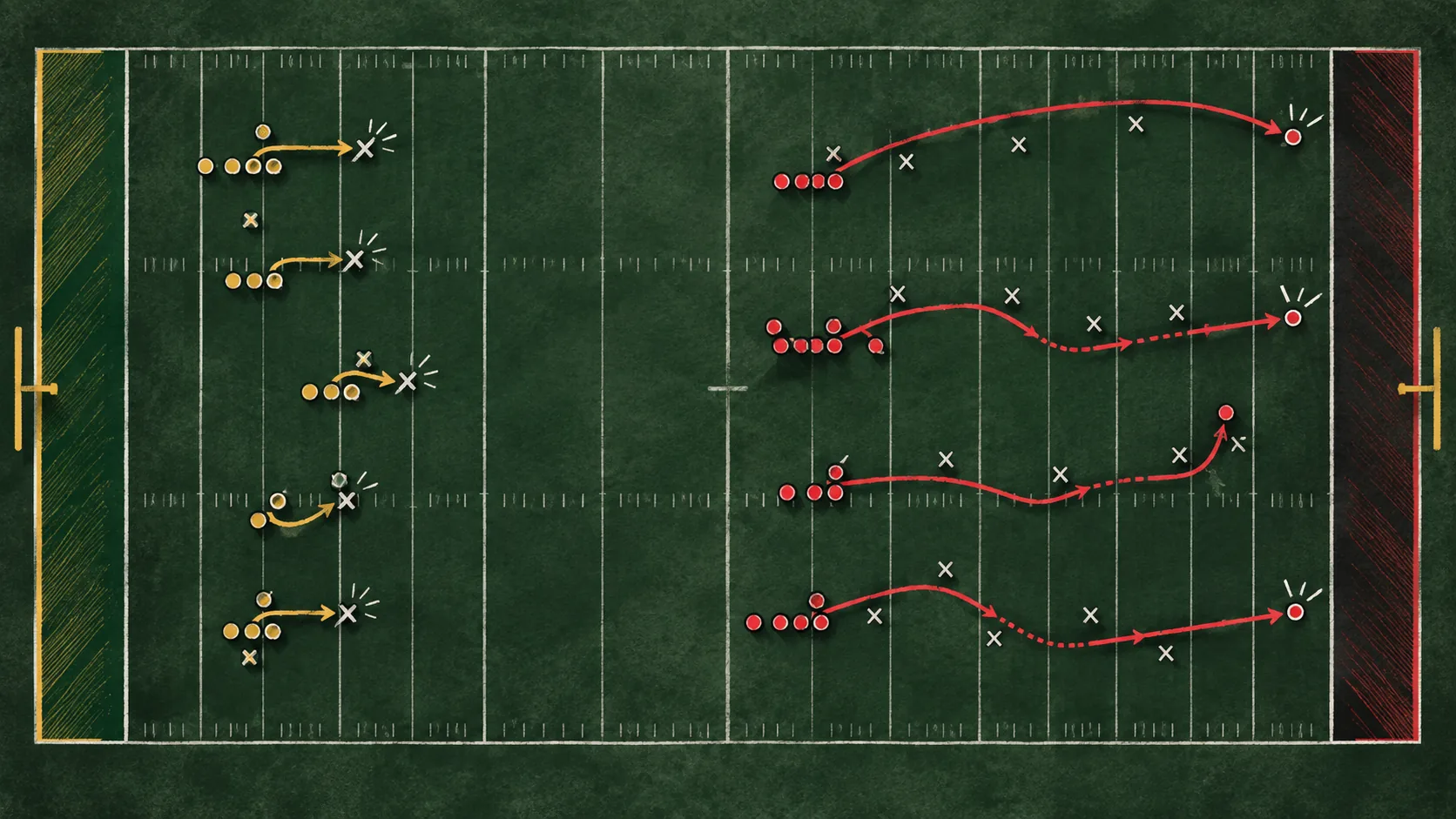
Atlanta generated 498 total yards to Green Bay's 328 and held the ball for 37:05 compared with 22:55 for the Packers. The Falcons made 25 first downs and converted six of 10 third downs, according to the club recap. That combination matters more than one highlight: it shows Atlanta repeatedly staying on the field while Green Bay struggled to answer. A home crowd's frustration can intensify when the visiting offense seems to control both the pace of play and the big moments.
Bijan Robinson rushed 29 times for 194 yards and two touchdowns. Drake London caught nine passes for another 194 yards. Robinson broke gains of 55 and 31 yards; London had catches of 68 and 40. Those plays account for a substantial part of the Falcons' production, but they also changed field position and made the defense's job harder. Green Bay had some successful defensive snaps, including an early Xavier McKinney interception, yet those moments did not produce a sustained answer. The boos cannot be reduced to a single blown coverage when the overall yardage, clock and third-down figures were so lopsided.
A home opener carried a 13-game streak into the night
This was the Packers' first home game after road trips to Minnesota and the New York Jets. The official game report says the loss ended a run of 13 consecutive home-opening wins. It is reasonable to see that history as part of the occasion: an opener at Lambeau carries a familiar expectation of energy and a competitive show. But the streak does not prove that every fan expected an automatic victory, and its end alone does not explain the reaction late in the first half. The performance was visible before the streak became a final statistic.
The crowd story therefore has two layers. A special home date raised the emotional stakes, while the football itself supplied reasons for disappointment: long scoring droughts, thin rushing production and Atlanta's control. Readers can disagree over whether booing helps, hurts or simply expresses a paying spectator's judgment. Those are opinions. The 35–14 result, 17 rushing yards, 27 unanswered Falcons points and lost home-opening streak are the common evidence that both sides of the argument should start from.
How did other Packers respond to the crowd and the loss?
Kraft's comments were not the entire Packers response. His teammates and coach were asked to account for a defeat that unfolded in front of their own fans, and their answers put different parts of the night in focus. Some spoke mainly about failed execution; others acknowledged how the sound from the stands felt. Those emphases can coexist. The available interviews do not establish a divided locker room or a formal disagreement about what fans should do.
LaFleur and Love focused on the team's performance
Head coach Matt LaFleur described the loss as humbling and said Green Bay needed to find solutions before its next game. In the club's postgame takeaways, his attention was on correcting a performance in which Atlanta won the line of scrimmage, created long gains and kept the Packers' offense off schedule. He said the extra days after the Thursday game offered time to work together. That is a football response to the same events that drew boos. The account does not say he identified crowd noise as the reason Green Bay lost.
Love similarly described an offense that could not execute consistently or sustain drives. His 312 passing yards are a useful reminder that a single counting statistic can hide the shape of the game. Much of that production came in a contest where Green Bay had fallen far behind, while four early three-and-outs and the failed short-yardage chance had already taken away opportunities to control the score. Love's postgame focus on rhythm and execution addressed a problem the players can change. It did not answer whether fans should express disappointment aloud, and there is no need to force his answer into a position on that question.
Watson and Cisse acknowledged the fan reaction
Christian Watson and rookie cornerback Brandon Cisse were more direct about the crowd. The Los Angeles Times reported that Watson found the boos difficult to hear but said the team needed to put a better product on the field. He had caught seven passes for 96 yards and Green Bay's opening touchdown, so his answer came from a player who contributed to the team's best moment as well as endured its downturn. Cisse said he understood why paying spectators were frustrated and accepted that Green Bay had to play better. Neither comment proves those players welcomed the boos. They recognized the performance that preceded them.
The disagreement among supporters is real, but its size is unknown. In a self-selected Packers fan discussion, some commenters argued that ticket buyers may voice frustration after repeated failures; others agreed with Kraft that booing a home team can make recovery harder. Those posts illustrate competing reactions to the interview. They are not a representative poll of Lambeau attendees or of Packers fans generally, and they cannot establish why anyone at the game chose to boo. The shared evidence is narrower: the team played poorly, audible boos were reported, Kraft wished for stronger support and several other Packers accepted responsibility for improving the football. The Week 3 results give the game context, but the fan dispute itself cannot be settled by a box score.
What should fans watch before Green Bay's next game?
The next opportunity to change the conversation is already on the calendar. Green Bay's official 2026 schedule lists a trip to the Tampa Bay Buccaneers on Sunday, October 4, at noon Central (1 p.m. Eastern), with FOX listed as the broadcaster. The Thursday-to-Sunday gap gives the Packers ten calendar days after the Falcons game to review the defeat, practice and prepare. The listed date, time and network should be checked again near game day because NFL schedules can change. Green Bay then hosts the Chicago Bears on October 11, its first scheduled return to Lambeau since the boos.
Against Tampa Bay, the useful questions are measurable. Can the Packers sustain early drives instead of repeating four first-half three-and-outs? Will the offense get enough productive rushing opportunities to avoid another nine-carry, 17-yard night? Can the defense limit the long runs and receptions that helped Atlanta gain 498 yards? If Green Bay falls behind, can it answer before a long unanswered scoring run makes a late touchdown mostly cosmetic? These are questions prompted by the Falcons tape and statistics, not a prediction that LaFleur will make a specific lineup change or that one performance will define the season.
The Week 4 game also offers a way to assess Kraft's comments fairly. A better offensive showing would not prove that fans were wrong to boo on September 24, just as another loss would not prove that the boos caused anything. It would show whether the team corrected the weaknesses its own coach and quarterback identified. Supporters can follow the Packers schedule and the TV listings for current game details. At 1–2, Green Bay's immediate problem is the football: keeping drives alive, preventing explosive plays and giving home supporters a stronger performance when the team returns to Lambeau.
Comments