Mike Vrabel, Nick Sirianni and Aaron Glenn were each reportedly fined $250,000 for conduct toward game officials. The crucial qualification is that the fines were placed on hold and could be repealed if the coaches avoid further violations. As of October 27, 2026, the reporting does not establish that any of them has paid $250,000 or that the sanctions have been permanently withdrawn. This is a story about substantial conditional discipline, with important details still private.
That distinction helps explain why the news has generated competing reactions. A headline can sound like an immediate quarter-million-dollar bill; a conditional sanction can operate as a warning backed by a serious financial consequence. Here is what is known, what the coaches have said, and how to separate the legitimate debate about officiating from assumptions about these particular cases.
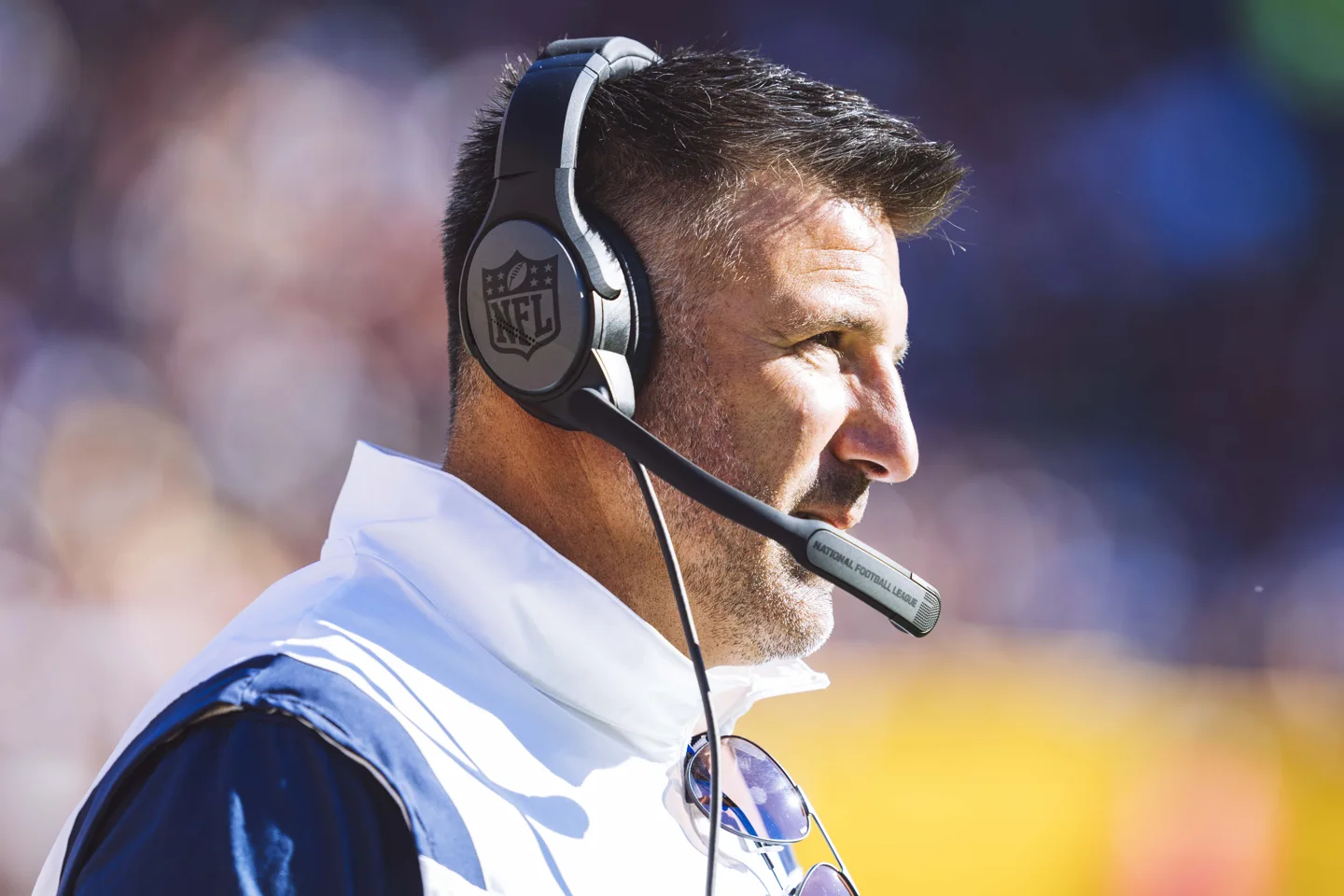
Cover: Mike Vrabel with Tennessee in 2022, an archival photograph unrelated to the 2026 incidents. All-Pro Reels / Joe Glorioso, CC BY-SA 2.0; resized and converted to WebP, distributed under the same license.

What was reported about the three $250,000 fines?
ESPN’s October 22 report identified Philadelphia Eagles coach Nick Sirianni, New England Patriots coach Mike Vrabel and New York Jets coach Aaron Glenn as the three recipients. It attributed the information to sources and said Sports Illustrated first reported the fines on Wednesday. The reported reason was conduct toward game officials. That is a category of behavior, rather than a public description of every incident supporting every sanction.
The amount and the current payment status
| Coach | Team | Reported fine | Reported status |
|---|---|---|---|
| Mike Vrabel | Patriots | $250,000 | On hold; potentially repealed |
| Nick Sirianni | Eagles | $250,000 | On hold; potentially repealed |
| Aaron Glenn | Jets | $250,000 | On hold; potentially repealed |
Adding the three amounts produces $750,000. It does not establish $750,000 in money collected. For a reader deciding whether the punishment is too severe, that is an essential difference: the possible financial consequence and the immediate financial consequence need separate descriptions. Equally, saying that the coaches were merely warned understates the reported existence of specific monetary sanctions.
The underlying letters have not been presented in these reports. That limits what outsiders can reconstruct about the timing of discipline, previous communications or the evidence considered in each case. A television clip of a coach shouting may illustrate why viewers became interested, but it cannot supply the contents of a private disciplinary decision. Treat any claim that one particular gesture explains all three fines with caution unless a source actually identifies that connection.
For following the football side of these stories, the NFL team schedule directory keeps each club’s upcoming games together. A disciplinary headline does not itself change an opponent, kickoff time or coaching assignment. Those consequences would require their own announcement.
What does a fine held in abeyance actually mean?
In plain English, abeyance means the action is being held rather than carried through immediately. In this story, the practical point is that the coaches may avoid paying the stated amounts if the conditions attached to the hold are satisfied. Front Office Sports reported that the fines could be repealed if the individual coach has no further violations. That report describes a conditional outcome, not a completed cancellation.
A conditional hold is different from a successful appeal
Imagine three separate status labels: imposed, held and rescinded. Imposed describes a sanction that has been assessed. Held describes its execution being paused. Rescinded describes the sanction being withdrawn. These are useful descriptions of different stages; they are not interchangeable words for the same result. A headline saying a fine was overturned would suggest a change in its validity or final disposition that the current reporting does not establish.
A successful appeal is also a different explanation for avoiding payment. An appeal can challenge a decision; a conditional hold can instead give someone an opportunity to satisfy requirements going forward. The public accounts here do not justify inventing an appeal hearing, an appeals officer or a ruling exonerating any coach. They establish a reported hold and the possibility of repeal.
What remains unknown about the conditions
The full written terms have not been supplied in the reporting cited here. Readers therefore should not assume a specific calendar date when the obligation automatically disappears, a precise list of forbidden words, or that any future disagreement with an official must trigger collection. Those details would determine how the arrangement operates, and they need evidence of their own.
That uncertainty leaves room for a fair criticism of the communication. A large number attracts attention, while an unpublished condition makes the real consequence harder to assess. It also leaves room for the opposite interpretation: conditional discipline can create a meaningful incentive to change behavior without immediately extracting the maximum amount. Both are evaluations of the structure. Neither establishes what a private letter actually says.
When a new update appears, look for a verb that changes the status: collected, rescinded, upheld or extended. A repeat of the original amount with a new photograph does not necessarily represent a new disciplinary development.
What have Vrabel, Sirianni and Glenn said?
The coaches’ public responses add context, but none supplies the complete disciplinary paperwork. It is useful to read them for what each coach actually addressed: the confidentiality of league discussions, personal behavior, or the practical difficulty of communicating during a game. They do not fill every gap in the initial reports.
Vrabel’s October 26 response
NBC Sports Boston’s account of Vrabel’s Monday news conference described his reluctance to discuss the fine and his concern that the subject was supposed to remain confidential. That supports saying he was unhappy about the information becoming public. It does not establish who disclosed it, whether a specific confidentiality rule was breached, or what the NFL had privately told him.
Vrabel also described the value of officials explaining what they saw. He acknowledged that coaches and players make mistakes and that officiating is difficult. That is a constructive distinction for fans: requesting a clear explanation of a ruling is a different issue from how a person delivers criticism. A coach can disagree with an interpretation and still have choices about language, proximity and whether a conversation continues after an explanation.
Sirianni and Glenn kept league discussions private
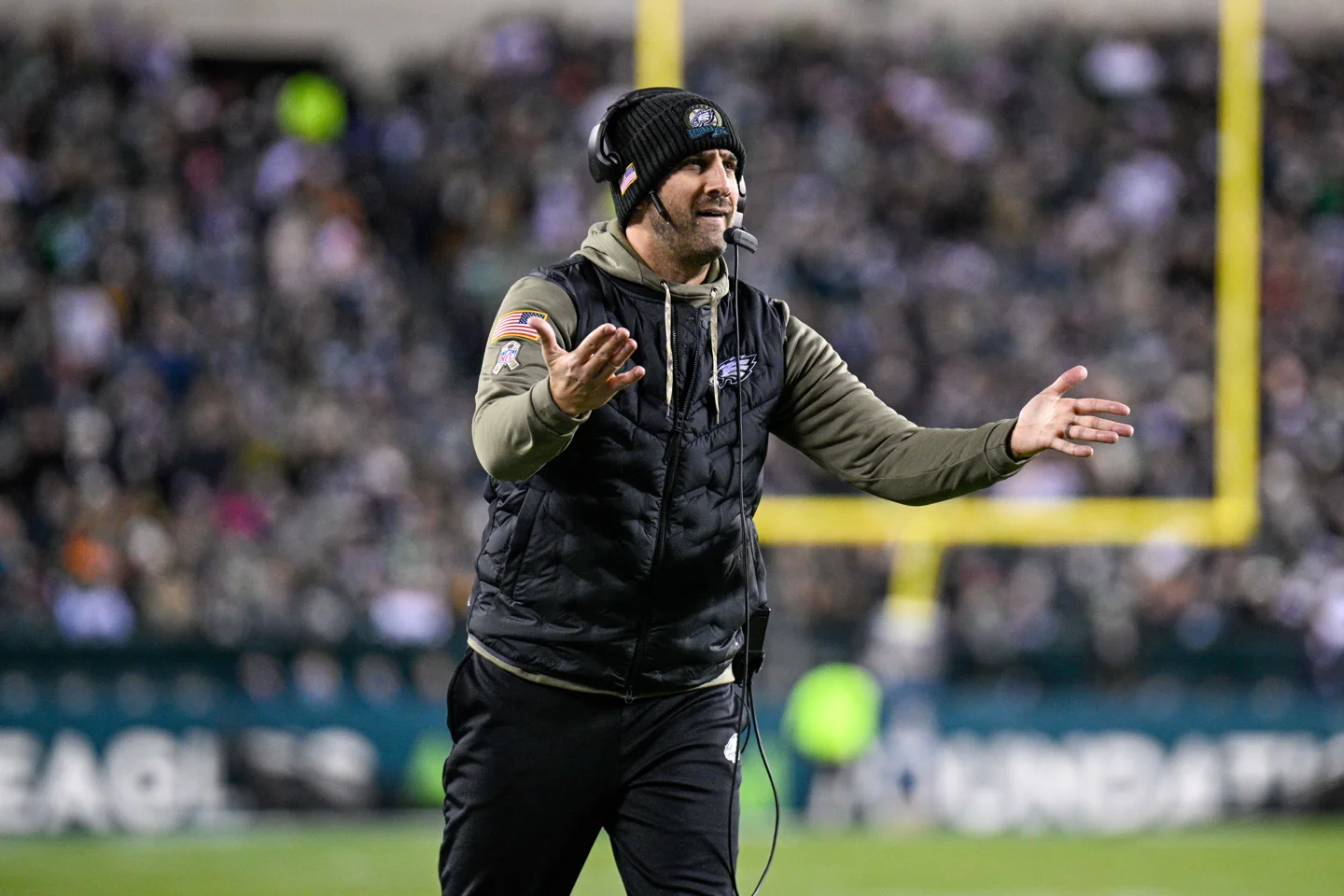

In the Inquirer’s October 22 account, Sirianni declined to disclose his conversations with the league. He discussed trying to improve as a coach and a person. That is a broad reflection on conduct; it should not be repackaged as a detailed confession about a play that the report does not identify.
Glenn likewise kept the matter private in the public remarks reported by Front Office Sports. He expressed support for officials and recognized the speed and difficulty of their decisions. A reader may find that response reassuring or evasive, but either interpretation remains an assessment of his public presentation. It cannot establish the contents of the league’s evidence.
There is a useful discipline in applying the same standard to all three men. Do not treat an expressive coach’s reputation as proof of a new allegation, or a restrained news conference as proof that nothing happened. The reported financial status is a factual question. A coach’s demeanor is observable context. The unseen details of a case remain unseen until a reliable account supplies them.
Why can sideline behavior bring a flag and a later fine?
A game penalty and a later financial sanction address different consequences. The first changes the administration of the contest. The second concerns an individual’s conduct within the league. The 2026 NFL rulebook lists non-player unsportsmanlike conduct and non-player abusive language among its penalty references. A head coach’s behavior therefore is not automatically outside the officials’ jurisdiction just because he is not participating in the play.
The clearest way to understand the distinction is to imagine a sideline exchange that draws a flag. The crew must administer the resulting penalty and continue the game. A later assessment of behavior can consider a different question: whether additional discipline is appropriate. Seeing the yardage enforced does not tell a viewer whether a financial decision will follow. Seeing a fine reported later does not erase the yardage that already affected the game.
This is why comparing a quarter-million-dollar figure directly with a player’s published fine for a particular offense can mislead. The NFL’s public fines and appeals explanation explicitly describes a player code developed with the NFL Players Association. Its account of letters, hearings and paycheck deductions should not simply be pasted onto a head coach’s case. The same sport contains different disciplinary relationships.
That page also explains how player conduct can be examined after a game, including plays submitted by teams. It is useful background on why a televised flag is not the entire accountability process. It is not proof of which people reviewed these three coaches, where any eventual coach fine would go, or whether an individual coach has appealed. Those claims would need a source specific to the coaching discipline.
For viewers, keep the two questions separate while watching: was the game penalty justified under the applicable rule, and was any later sanction proportionate to the behavior? It is possible to disagree with a call and still think a coach’s response crossed a line. It is also possible to support behavioral standards while questioning the size or clarity of a sanction.
Why are fans arguing about fairness and referee accountability?
Discussion in an r/nfl thread about the fines illustrates the competing complaints: the amounts seem disproportionate to some readers, while others focus on what behavior actually occurred and whether the hold makes the penalty meaningful. That is a sample of reactions from one forum, rather than evidence that all fans share a position. The arguments are more useful than treating comment totals as a public-opinion poll.
The strongest case for a substantial sanction
The strongest argument is about leadership and preventing escalation. A head coach models how the rest of a sideline responds to frustration. If a conversation becomes personal, other participants may follow that tone, and the crew must manage behavior as well as the next play. A league can reasonably want an explanation-seeking exchange to remain different from harassment or abuse.
Conditional discipline can fit that objective. It creates an incentive for future restraint while leaving room for the full amount to be avoided. That is an editorial assessment of the possible logic, not a claim that the NFL publicly explained why $250,000 was the correct figure in each case. Whether this particular amount is justified still depends on the behavior, prior notice and standards applied.
The strongest case for more transparency
The strongest criticism is that outsiders have been given the dramatic number without enough detail to compare the cases. Equal amounts do not necessarily mean identical behavior, but neither do they demonstrate that different behavior was weighed consistently. An explanation of the applicable standard and the status of enforcement would make the public discussion more informed without requiring every private conversation to become public.
Historical comparisons show why the figure attracts attention, although they do not establish the correct punishment here. Bill Belichick received a $500,000 fine in 2007 over prohibited videotaping. Tomlin’s 2013 sideline sanction was $100,000. The reported $250,000 therefore is substantial, but it is not the largest coach fine simply because a headline describes it as unusually big. These cases involve different conduct, different years and different enforcement circumstances. A ranking of nominal dollars provides scale; it cannot substitute for an explanation of the present standard or the conditional terms.
The claim that officials never face consequences also needs qualification. Associated Press reporting in October described suspensions of Jeff Seeman and Adrian Hill for inappropriate interactions with players. Those were conduct cases. They should not be presented as a system in which every disputed judgment call leads to suspension, or as proof that every coach and official has been treated equivalently.
A consistent demand is easier to defend: explain standards, apply them across participants, and give enough information to distinguish mistakes in officiating from misconduct toward another person. It is possible to ask for better officiating and better sideline behavior simultaneously. Making either issue an excuse to dismiss the other leaves fans with less accountability rather than more.
What should fans watch for next?
The next meaningful development would be a reliable update on the sanctions themselves: whether any money is collected, whether a fine is rescinded, or whether the league clarifies the conditions. A coach declining to answer another question would not settle any of those points. Nor would a quieter sideline performance, by itself, prove that a financial obligation has been cancelled.
Use official team news conferences to hear the full context of public remarks. The Patriots’ transcript archive, for example, separates individual media sessions by date. That matters when a short clip begins circulating again: an old answer can look like a reaction to a new event if its date is removed. A report published this week can also describe discipline assessed earlier, so publication date and incident date need not match.
When evaluating the next headline, ask three practical questions. Does it identify a new decision? Does it name or describe the source of that information? Does it distinguish a reported sanction from an official announcement? If the answer to all three is unclear, the article may be repackaging the existing story rather than advancing it.
There is also no basis in the cited accounts to assume the fines will alter the teams’ next kickoff times or remove a coach from a future game. Keep those football questions tied to the current weekly NFL schedule and any separate team announcement. Financial discipline, availability and scheduling are different developments, even when they involve the same club.
For now, the most accurate description remains specific: three coaches face reported $250,000 fines for conduct toward officials, with payment on hold and potential repeal dependent on future conduct. The debate about proportionality is legitimate. It becomes more useful when it starts from the conditional status and acknowledges the information that has not been made public.
Comments