
“Original NFL owners” can mean the people who formed the league in 1920, the founding owners of individual franchises, or families that still have an ownership connection today. Those are three different lists. The NFL grew from an association of clubs; it was not founded as one team or owned by one person.
This guide follows the important examples, including the Bears, Cardinals, Giants, Steelers and former AFL clubs. It explains where founding dates, purchases and family succession fit, why Green Bay is different and how to read a current owner profile without mistaking it for a complete franchise history. Current leadership examples are described as of October 11, 2026.
Three different meanings of original NFL owner
The NFL's founding ownership story begins in 1920, when representatives of professional clubs organized the association that became the modern league. The Pro Football Hall of Fame's founding account identifies a group effort, rather than a single person buying or creating all of professional football.
A team founder is a different subject. Someone could establish a franchise years after the league began, or start a club in another league that later became part of the NFL. An ownership family may then remain involved after the founder's death. None of those descriptions automatically means the current family representative attended the league's original meeting.
| What you mean | The question to ask | The date that matters |
|---|---|---|
| League founding participant | Who helped organize the association? | The 1920 formation meetings |
| Franchise founder or original ownership group | Who started this particular club? | The club's founding year |
| Longstanding ownership family | Which family retained an ownership connection? | Its acquisition and succession dates |
| Current controlling owner | Who represents and controls the club now? | The latest confirmed ownership arrangement |
These categories can overlap, but they should not be collapsed into one label. A family that bought an established team has a real ownership history even if it did not create the franchise. A founder's descendant can carry that family connection without having personally founded anything. A club can retain its franchise history through a relocation while changing its owner.
For fans, the practical benefit is straightforward: you can read a headline about an owner, an anniversary or a family succession and know which part of the timeline it describes. Look for the action attached to the name—founded, purchased, inherited a stake, became chairman or became controlling owner. That verb often explains more than an undated list of surnames.
The owners and representatives behind the 1920 league
Two Canton meetings help explain the beginning. Representatives of four Ohio teams met on August 20, 1920. A larger meeting followed on September 17, when the American Professional Football Association took shape. The Hall's early chronology places those events before the adoption of the NFL name in 1922.
Ralph Hay hosted the meeting and Jim Thorpe became president
The September gathering took place in the Hupmobile showroom of Canton Bulldogs owner Ralph Hay. Jim Thorpe became the association's first president. Hay's role as host and club owner and Thorpe's role as league president were different. Neither description means one man owned every member club.
The participating clubs that entered the association included Akron, Canton, Cleveland and Dayton in Ohio; Hammond and Muncie in Indiana; Rochester in New York; and Rock Island, Decatur and the Cardinals in Illinois. This was a collection of local football operations seeking a shared organization, not a rollout of today's 32 teams with their present names and markets.
A detail in the Hall's founding story helps explain different team counts: Massillon was represented but withdrew, never joining the league. Buffalo, the Chicago Tigers, Columbus and Detroit joined later in 1920. The meeting's attendance and the first season's membership therefore describe different stages of formation.
For anyone compiling original owner names, that distinction is essential. Attendance can establish that someone represented a club, but it does not by itself explain every partnership, investment or legal ownership arrangement behind it. A carefully labeled founder list is more informative than treating each attendee as the sole owner of a modern franchise.
The early league also operated in towns whose professional teams later disappeared. Their absence from today's schedule does not make them incidental to the formation story. When you look for the founders, keep the 1920 association in view; when you look for surviving franchises, follow the specific clubs forward. Those are related historical tasks, but the answer to one cannot stand in for the other.
The Bears and Cardinals show two different ownership paths
The Bears and Cardinals are the two franchises that survive from the league's 1920 membership. Their survival answers a question about clubs, however, rather than proving that their ownership arrangements followed identical paths. One story includes a company team transferred to a player-coach; the other includes a family buying a franchise that already existed.
From the Staley company to the Halas family
The Bears began as the Decatur Staleys. In 1921, A. E. Staley turned the team over to George Halas, who moved it to Chicago and made Dutch Sternaman his partner. The Bears name followed in 1922. The Hall's chronology preserves those steps, which are more precise than imagining a modern family ownership arrangement unchanged from the first moment.
Halas became the central figure associated with the franchise. His daughter Virginia Halas McCaskey assumed control following his death in 1983. The Bears' 2025 remembrance records her death on February 6, 2025. Historical pages naming her as the team's current principal owner need that later event taken into account.
The club's current profile lists George H. McCaskey as chairman, a position he took in 2011. He is Halas' grandson. These names explain the family connection across generations; they do not establish that one individual owns every share or that the chairman's appointment year is the franchise's founding year.
The Cardinals existed before the Bidwill family bought them
The Cardinals' roots reach to Chris O'Brien's Chicago neighborhood team in 1899. The Bidwill family entered the ownership story later, in the 1930s. Charles Bidwill therefore belongs in a history of the family's acquisition, rather than being described as the person who originally created the club or its 1920 owner.
Arizona's official Michael Bidwill biography describes a third generation of leadership, following Charles and Bill Bidwill. Michael became owner after Bill's death in 2019. The team's present location and the family's long involvement both belong in the story, but neither should replace the earlier Chicago origins.
Compare the two franchises using two questions: did the club survive, and how did ownership pass between people? The first answer can be yes for both, while the second requires different timelines. That distinction prevents “oldest team,” “original family” and “longest ownership tenure” from being treated as interchangeable claims.
The Giants and Steelers brought later founding families
A franchise can have deep founding-family roots without being a 1920 charter member. The Giants and Steelers are useful examples. Their founding years came after the league's formation, and the descendants associated with them should be connected to their own club histories.
Tim Mara's Giants began in 1925
Tim Mara established the Giants in 1925. The team's founder biography follows his role in bringing the franchise to New York. Calling him a Giants founder is accurate; inserting the Giants into the original 1920 membership would change the chronology.
The Mara connection also does not mean every later share remained exclusively within that family. Preston Robert “Bob” Tisch purchased 50 percent in 1991, according to the official Steve Tisch biography. That percentage describes the historical transaction. It should not be copied into a present-day ownership chart without accounting for subsequent events.
The Giants announced a minority, non-controlling investment by Julia Koch and her family on October 22, 2025. The announcement specified that leadership remained unchanged, with John Mara as president and CEO and Steve Tisch as executive vice president and chairman. The example shows how new investors and established family leadership can coexist.
Art Rooney's Pittsburgh franchise began in 1933
Art Rooney Sr. founded Pittsburgh's NFL franchise on July 8, 1933. His son Dan Rooney and grandson Art Rooney II belong to later generations. The repeated first name can confuse readers, so keep the suffix and relationship attached: Art Sr. was the founder; Dan was his son; Art II is Dan's son.
The Steelers' Dan Rooney biography records the transfer of the presidency to Art Rooney II in 2003. That was an executive succession many decades after the franchise began. It should not be described as Art II founding or purchasing a brand-new team in 2003.
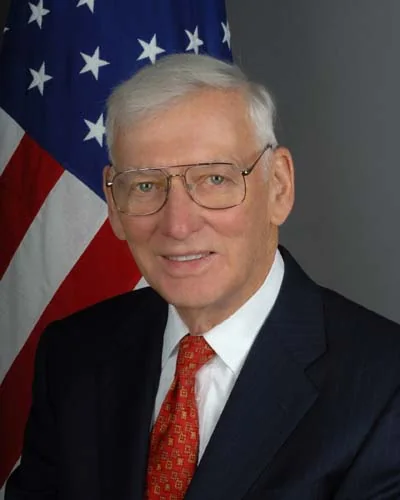

The portrait illustrates a later generation of the Rooney family, rather than showing Pittsburgh's founding owner in 1933. For both the Giants and Steelers, names, relationships and transaction dates help explain continuity. They also leave room for the partners and changes that a simple claim of “the same owner since the beginning” can conceal.
AFL founding families are part of today's NFL too
Today's NFL contains franchises whose founders originally operated in the American Football League. Their ownership stories are part of modern NFL history, but those founders did not organize the 1920 association. The league a club entered at the start matters just as much as its name today.
The Hunt, Adams and Brown families began in another league
Lamar Hunt helped establish the AFL after trying unsuccessfully to obtain an NFL franchise. His Hall of Fame biography follows the Dallas Texans' move to Kansas City and transformation into the Chiefs. The franchise's beginning should not be rewritten as Hunt buying a pre-existing Kansas City NFL team.
The Chiefs' current Clark Hunt profile names him chairman and CEO and identifies him as Lamar's son. Those facts explain a founding-family connection without making Clark an original AFL organizer. A current executive title and a parent's historical achievement belong to different generations.
Amy Adams Strunk provides another clear example. The Titans list her as controlling owner, a role she assumed in March 2015, and as the daughter of franchise founder Bud Adams, an AFL co-founder. The date she assumed control does not mean the franchise started in 2015. Its earlier Houston Oilers history remains part of the same club's story.
Cincinnati's Paul Brown history identifies him as the Bengals' founder, and the team's historical account places its first playing season in the AFL in 1968. Mike Brown is listed as president in the club's current front office. Once again, the current name and the founding role should be read together rather than substituted for each other.
These examples show why an ownership-family article needs more than a list of the oldest present-day teams. A club can enter the NFL through a merger and still retain an important founding-family identity. Conversely, simply being in the AFC today does not establish an AFL origin. Follow the individual franchise's history and its ownership transitions; the conference label alone cannot supply the missing dates or relationships.
Green Bay has a different answer to who owns the team
Green Bay's history does not fit neatly into a founder-to-descendant ownership list. The Packers were organized in 1919, joined the league in 1921 and became a publicly owned nonprofit corporation in 1923. Those three dates describe formation, league admission and an ownership structure. None should replace the others.
The team's official history identifies Curly Lambeau and George Whitney Calhoun as its longstanding co-founders and follows the early involvement of the packing companies. A sponsor helping a club get started, a founder organizing players and a corporation later operating the franchise are distinct roles, even when their stories intersect.
The Packers' shareholder page explains that the organization is governed by a board of directors and a seven-member executive committee. It also states that shareholders receive no dividends. A president or CEO is therefore a leader within that structure, rather than the single billionaire owner whose family name supplies the entire ownership story.
That difference changes how you should read an “NFL owners” table. A row for Green Bay may name the corporation, the club's representative or its president. The table needs to say which one it means. A corporate name is not missing a person's surname; it is answering a different ownership question.
Fan ownership also does not mean every supporter owns stock, or that buying a ticket makes you a shareholder. The club states that common stock is unavailable outside an offering period and that its last offering ended on February 25, 2022. Check the official shareholder information for the actual terms and availability rather than assuming shares trade like an ordinary listed company.
For a football history discussion, Green Bay's example is especially useful because it separates tradition from a family tree. A team can preserve a strong identity and a long local connection through a community ownership structure. Its story belongs beside the founding families, while retaining the corporate and historical distinctions that make the Packers unusual.
How to read an ownership history without confusing the dates
Start with the franchise, then follow the people. A useful ownership timeline answers four separate questions: when the team began, when an owner acquired an interest, when leadership passed to another person, and what title that person holds today. One anniversary cannot answer all four.
This matters when you see a headline about a new investor. A minority investment can change the ownership group while the same president or chairman continues to lead the club. Likewise, a family succession can change the person making decisions without creating a new franchise. Look for the club's announcement and the person's exact role before treating either event as a complete sale.
To connect an ownership story with the team you follow, start with our NFL teams directory. For the next game, use the NFL games today schedule. An ownership history explains the organization behind the uniform; the schedule tells you when that organization returns to the field.
Quick answers about original NFL owners
Who originally owned the NFL? The league was organized by representatives of multiple clubs in 1920. Ralph Hay hosted the Canton meeting, and Jim Thorpe became president. Neither fact means one person owned every team.
Which original NFL teams still exist? The Bears and Cardinals trace their league membership to 1920. Their survival does not mean every present owner held the team at its founding, or that every family interest stayed identical through the decades.
Are the original owners still alive? The famous early founders discussed here are historical figures: George Halas died in 1983, and Tim Mara died in 1959. A surviving family connection refers to later generations, rather than the founder still serving as owner.
Who owns Green Bay? The Packers have a public nonprofit corporation with shareholders and board governance. That structure is different from a club controlled through a private ownership group, and Packers stock does not pay a dividend.
Cover image: archival George Halas portrait in a New York baseball uniform, Bain News Service, via the Library of Congress photograph on Wikimedia Commons. Public domain; resized and converted to WebP for this page.

Comments