
Mark Davis is the controlling owner of the Las Vegas Raiders. He is Al Davis' son and took over the franchise after his father's death in 2011. Other investors have joined the ownership group, but a minority stake or a future purchase option is different from taking control today.
This guide explains the Davis family connection, the move to Las Vegas, the roles of newer investors and the public statements behind succession headlines. Ownership information was reviewed as of October 11, 2026. For private-life questions, the answers below are dated to what Davis himself has publicly said.
Who owns the Las Vegas Raiders today?
The Raiders' official team profile lists Mark Davis as owner. For the question most fans are asking—who controls the franchise—Davis remains the central name. You should distinguish that role from the names of people who hold smaller interests in the business.
In his March 31, 2026 interview, Davis said the approved succession arrangement left the team's operations unchanged. The conditional future purchase option discussed below did not announce that someone had already replaced him.
Three different headlines can therefore describe three different developments: an investor joins the ownership group, an owner prepares a succession plan, or someone acquires control. Seeing the word “ownership” in all three does not make them the same event. Look for the specific role and the effective date before drawing a conclusion.
Calling Davis the owner also does not mean this article claims he holds every share. Football coverage often uses one name to identify the person at the head of a franchise. That shorthand cannot supply a complete list of investors or their current percentages.
For a fan browsing NFL teams, the useful answer is the leadership identity, followed by the context. For a detailed business claim, such as the precise percentage held by every partner, you would need a current ownership disclosure. An old biography, a photograph of two executives or a headline about an option cannot fill in those details. The rest of this guide separates the family history and announced investments so you can read those stories without confusing their meanings.
How the Davis family became part of Raiders history
The Davis name is a major part of Raiders identity, but the franchise's beginning and Al Davis' arrival are different dates. Keeping them separate helps when an old broadcast calls Al the architect of the organization. That description of his influence does not mean he established the original club.
Al Davis joined after the Raiders were founded
The Raiders' official timeline places the Oakland franchise's start in 1960 and Al Davis' appointment as head coach and general manager in January 1963. The Pro Football Hall of Fame profile then traces his AFL commissioner role and return to Oakland as managing general partner in 1966.
| Year | Milestone | What it means |
|---|---|---|
| 1960 | Oakland franchise begins | The team existed before Al Davis joined |
| 1963 | Al becomes coach and general manager | His Raiders leadership starts in football operations |
| 1966 | AFL commissioner, then returns to Oakland | His career includes a league leadership role |
| 1992 | Hall of Fame class | His contribution to pro football is recognized |
These milestones describe a career, rather than a complete accounting of shares. They explain why the same person appears in coaching, league-history and ownership discussions. When discussing a family legacy, identify the role attached to each date instead of compressing every event into “he bought the team.”
Carol Davis was Mark's mother and Al's wife
After Al's death in 2011, NFL coverage reported that Carol and Mark would retain the Raiders' controlling interest. Carol was Al's wife and Mark's mother. She was not Mark's wife.
The team's October 2025 tribute to Carol Davis recorded her death at 93 and her long connection to the organization. It also recalled her lighting the Al Davis Memorial Torch at the first Allegiant Stadium game in September 2020. That public role explains why fans encounter her name in Raiders history.
A family relationship, an inherited business interest and a ceremonial tribute each tell you something different. None alone reveals every detail of an estate or a current ownership agreement. For a fan learning the names, the essential family connection is simple: Al and Carol were Mark's parents, and Mark became the franchise's operating leader after his father's death. Describing that history accurately does not require guessing private arrangements.
The move from Oakland to Las Vegas happened in stages
Both 2017 and 2020 appear in accounts of the Raiders' move, and both can be correct. They describe different steps. On March 27, 2017, the club announced that it had received conditional NFL approval to relocate. That was the league's approval of the proposed move, rather than the date of the first Las Vegas home game.
The same announcement discussed continuing to play in Oakland while the new stadium was being developed. An Oakland Raiders photograph from 2017 therefore fits the timeline perfectly: approval for a future move did not instantly change the setting of every game. The organization still had a transition to complete.
On January 22, 2020, the team officially adopted the Las Vegas Raiders name. That announcement gives the answer to a different question: when did the club publicly begin its Las Vegas identity? When discussing Davis' tenure, specify the milestone instead of treating every relocation date as interchangeable.
Allegiant Stadium became the Raiders' home in 2020
The Raiders' 2020 regular-season schedule began on September 13 with an away game against Carolina. The first home game at Allegiant Stadium came a week later, on September 21, 2020, against New Orleans. Las Vegas won 34–24. The stadium's own event listing identifies that Saints matchup as the first NFL regular-season game there.
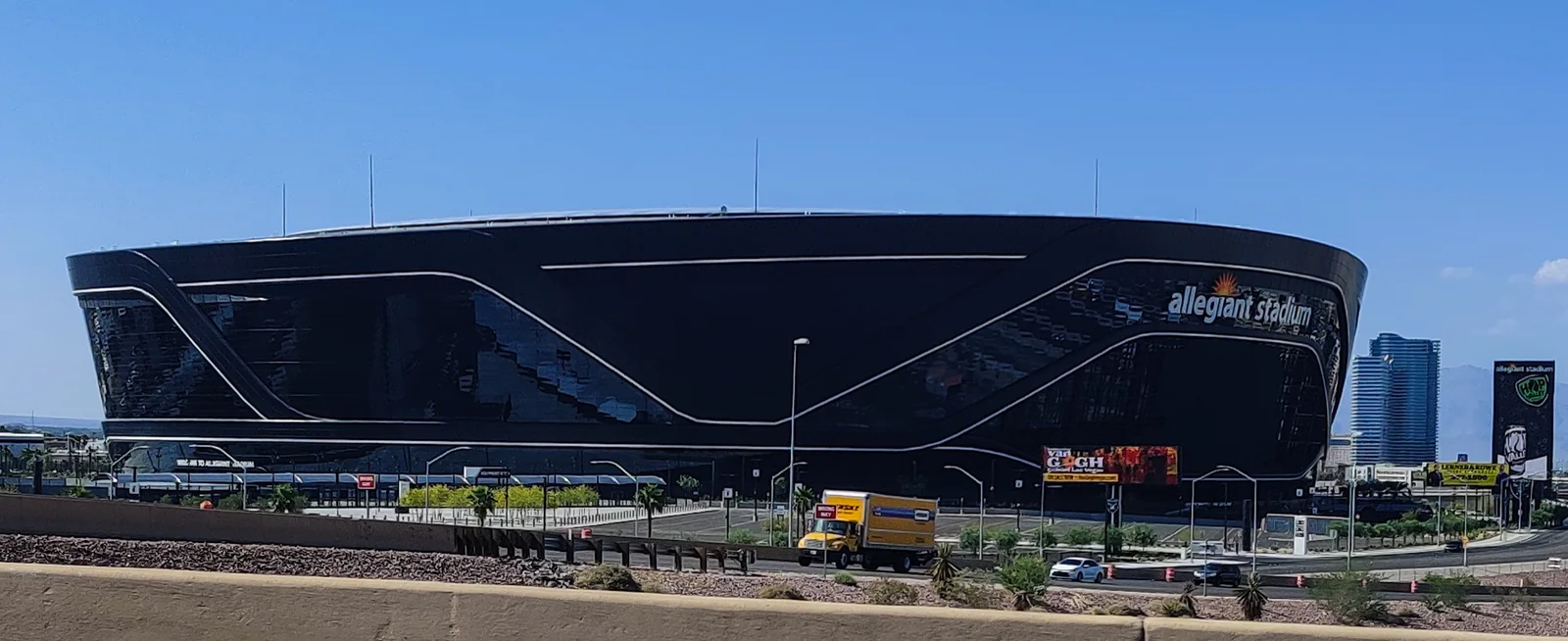

These details also distinguish the season opener from the stadium opener. A Raiders fan asking when Las Vegas first played an NFL game may mean either one. Adding “away at Carolina” or “home against the Saints” makes the answer useful without a long argument over dates.
For the next matchup, use the NFL games today listing rather than an archived relocation article. The move explains how the Raiders reached their current home; the current schedule tells you when and where to watch them now. The Las Vegas name continues the Raiders' franchise history rather than starting a separate expansion team's record.
Minority investors and a succession plan do not mean a new controlling owner
A famous name joining an ownership group can attract more attention than the person who continues to lead it. For Raiders fans, the useful question is what changed: an investment, a football advisory role, or the authority to control the club? Those are different developments, even when a short headline calls each one “ownership.”
Tom Brady's ownership stake is different from being the starting quarterback
The NFL approved Tom Brady as a Raiders limited partner. NFL Alumni's October 2024 announcement also records approval for Brady and Richard Seymour. Buying an interest in a team is a business relationship; it does not place the buyer on that team's playing roster.
Brady's football experience can still matter. In September 2025 Raiders coverage, Davis discussed Brady's contribution to the football side, while Brady described providing advice and acting as a sounding board. Minority ownership and meaningful influence can coexist. Neither description automatically makes someone the controlling owner, head coach or general manager.
When you see a story about Brady helping the Raiders, look at the action it describes. Giving advice, participating in a discussion and holding the final authority to run a franchise are different kinds of involvement. Avoid reading a familiar player's name as a comeback announcement or assuming that expertise alone determines an ownership title.
Egon Durban's purchase option depends on a future decision
In his March 31, 2026 interview, Davis said the Raiders' approved succession plan included Egon Durban's option to buy the controlling interest if Davis decided to sell. He also said the team's operations were continuing as before. That is a conditional future arrangement, rather than an announcement that Durban had already replaced him.
A purchase option and an ownership transfer answer different questions. The option concerns a right that may be exercised under its conditions. A completed transfer concerns who actually holds the interest after a transaction. A succession plan can prepare for a future change without requiring that change to happen on the day the plan is approved.
For a new Raiders ownership story, read for three details: whether it concerns a minority stake or control; whether it reports approval or completion; and whether any stated future condition has occurred. If the article only says an investor could buy control later, it does not establish that the Raiders have a new controlling owner today. That distinction is particularly useful when several updates about the same investor appear months apart.
What an owner does alongside the football staff
Ownership is part of the football organization, but it is not the same job as coaching or building the roster. As of this guide's October 2026 review, the Raiders list John Spytek as general manager and Klint Kubiak as head coach. Spytek's profile describes roster work with the personnel staff. Kubiak leads the coaching staff. Davis' owner title answers another question: who leads the franchise at the ownership level?
Those responsibilities can overlap in major decisions. The team's February 2026 account of the coaching search explained that Davis relied heavily on Spytek and Brady in finding the next head coach. That is a concrete example of an owner working with football people. It does not tell us that Davis personally decides every roster transaction or selects every play.
For fans following a personnel debate, start with the decision itself. A scouting evaluation or proposed player signing raises roster-building questions. How the offense uses that player raises coaching questions. Choosing the leadership of the organization raises ownership questions. Several people may contribute to one decision, so a simple “the owner did it” explanation can leave out the work that actually matters.
Davis also appears in news beyond games and hiring. On August 24, 2026, the Raiders and Intermountain Health announced a $25 million gift toward a children's hospital in Nevada. The announcement attributed $5 million each to Davis, Durban and Michael Meldman, with another $10 million committed by the club. The money was intended to help build the facility; the announcement did not say the hospital was already open.
This is why an owner profile includes more than a win-loss record. A fan can judge football results while also understanding that the franchise makes business and community commitments. Keep those subjects distinct when comparing stories: a hospital contribution is not a player acquisition, and a leadership announcement is not a guarantee of the next game's result. Understanding who is speaking and what decision is being discussed makes the weekly news much easier to follow.
The Las Vegas Aces are a separate team in a different league
Mark Davis also owns the Las Vegas Aces, the city's WNBA basketball team. On February 12, 2021, the WNBA announced approval of the sale from MGM Resorts International to Davis. The Aces' current front-office page lists him as principal owner, with Tom Brady and Sherry Delsen also listed under ownership.
That shared Davis-Brady connection explains why a search about the Raiders sometimes brings up women's basketball. It does not mean the Aces are a Raiders roster, an NFL affiliate competing for a Super Bowl, or the football franchise under a second name. The organizations play different sports in different leagues. Their ownership news needs to be read with the team identified.
The Aces' own staff list separates basketball operations from business operations. For someone following both Las Vegas teams, that is a useful reminder that an owner's name is only one part of the organization. A basketball coaching appointment concerns the Aces' staff; it does not appoint a Raiders head coach. Likewise, a Raiders draft selection belongs to the NFL team's football plans.
There are two simple ways to avoid mixing up the stories. First, read the franchise named in the announcement, even if the headline leads with Davis or Brady. Second, note the league granting approval. The WNBA's approval of the Aces sale in 2021 was an Aces transaction. It was not approval of a change to Raiders ownership.
If you want to attend both teams' games, treat the tickets and fixtures as separate searches too. Follow the Aces for basketball dates and the Raiders for football dates, then check the venue on the particular event. A shared owner or a shared city is not enough information to plan a trip. Keeping the club name attached to the news makes both the sports story and the practical next step clearer.
Quick answers to common Mark Davis searches
Ownership searches often jump from the football team to money or family. The following distinctions help answer those questions without confusing an estimate, an old photograph and a dated public statement.
Why a Raiders valuation is not Mark Davis' personal net worth
A valuation of the Raiders describes an estimate for the franchise under the publisher's stated method. Mark Davis' personal net worth concerns his own assets and liabilities. FINRA defines net worth by subtracting what a person owes from what that person owns. A team estimate alone cannot supply that full personal balance sheet.
For a deliberately hypothetical example, imagine a company with $8 billion of equity value and an investor holding 25% of its equity. Simple multiplication gives a $2 billion stake before considering the investment's specific terms. It does not give the investor $8 billion, a $2 billion bank balance or a complete net-worth calculation. These invented numbers are not a Raiders valuation or a claim about Davis' ownership percentage.
Before repeating a Davis wealth estimate, check its date, whether it measures the individual or the family, and what assets and debts it includes. Control of a franchise and ownership of every dollar of its value are different questions. A current team ranking cannot automatically update an older personal wealth estimate.
What Davis has publicly said about a wife and children
In the Raiders' March 31, 2026 interview, Davis said, “I don't have any children or a wife at this time,” while explaining the succession plan. That is his public statement about his circumstances at that time, rather than a claim that private circumstances can never change.
A photo of someone sitting near Davis does not identify a spouse or establish parenthood. The same care applies to family references: Carol was his mother, while Al was his father. When an old story mentions Al's wife, it is discussing another generation of the family. Keep the person and the date attached to the answer.
The cover photograph is also an archive rather than a family portrait: Mark Davis is on the left in a white jacket, with Dan Snyder near the center, before the Raiders' game at Washington on September 24, 2017. Photo: Keith Allison, Wikimedia Commons, CC BY-SA 2.0. Converted to WebP at its original dimensions; this adaptation retains the same license.

Comments