
Yes, Black NFL owners exist. Mellody Hobson, Condoleezza Rice and Lewis Hamilton are part of Denver's ownership group; Magic Johnson is a Washington Commanders limited partner; and Vince Carter, Tracy McGrady and Jozy Altidore joined Buffalo's group. These examples involve ownership interests rather than control of the franchise.
This guide explains the roles behind those names, additional documented examples and why owning a small stake differs from buying and leading a team. Current team-page examples were checked as of October 11, 2026. Historical entry dates are identified separately, and the list is not presented as a complete leaguewide census.
Black NFL owners exist, but ownership and control are different
Calling someone an owner answers one question: does that person have an ownership interest? Calling someone the controlling owner answers another: who has the designated authority to lead the ownership group? The two descriptions can apply to different people on the same team.
Denver offers a clear example. Its official ownership group page lists Mellody Hobson, Condoleezza Rice and Sir Lewis Hamilton as owners. The Broncos separately identify Greg Penner as their controlling owner and chief executive officer. The other participants' ownership is real; their title does not make each of them the person controlling the franchise.
| Term in an ownership story | What a fan should take from it |
|---|---|
| Owner or investor | The person or entity holds an interest in the team; the headline alone does not establish control. |
| Controlling owner | The designated leader of the ownership group, identified separately from the other investors. |
| Limited partner or noncontrolling investor | A participant whose stake does not give that participant control of the team. |
| President, executive or general manager | A job title. It is not, by itself, proof of an ownership stake. |
There is also an easily missed language difference. “Minority ownership” describes an interest that does not control the franchise. “Black ownership” describes representation by Black people. The first phrase is about the stake and its powers; the second is about the participants. A report can discuss both, but the words are not interchangeable.
The examples below identify documented participants and their teams. They are a guide to understanding ownership roles, rather than an exhaustive register of every investor or a ranking by share size. Exact percentages are omitted where the club has not publicly established them.
Denver's ownership group includes Hobson, Rice and Hamilton
The Walton-Penner Family Ownership Group took over the Broncos in 2022. Three widely recognized Black participants are Mellody Hobson, Condoleezza Rice and Sir Lewis Hamilton. The Broncos' acquisition-era reporting specifically discussed Hobson and Rice's place as Black women in NFL ownership and their enthusiasm for joining the organization.
Hobson brings an investment-management background. Her official team biography lists her as an owner in 2026, rather than treating the 2022 announcement as a one-day ceremonial appearance. For a fan reading a news report, that distinction is useful: an ownership-group member is different from a guest invited to a press conference.
Rice's Broncos profile identifies her ownership role and a football connection beyond her former government office. She served on the inaugural College Football Playoff selection committee from 2013 through 2017. That committee work was a separate role in college football; it did not make her an NFL owner before the Denver transaction.
Hamilton's team profile also lists him as an owner in 2026. The Formula One driver is an example of an athlete entering another sport through investment. A racing career and a football ownership interest can coexist without suggesting that he plays, coaches or manages the Broncos' roster.
What the Broncos' owner titles actually mean
When the Broncos list multiple people as “Owner,” the club is describing a group. It is not announcing several competing head coaches or several independent people with identical authority over every decision. Penner's controlling-owner designation and CEO responsibilities supply the separate leadership information.
This is why a familiar name should not be your only clue. Ask what the team calls the person, whether the announcement identifies the stake as controlling, and who has the designated operational role. You can recognize the importance of representation in the ownership group while still describing the franchise's leadership accurately.
A photo can help identify the person, but it cannot establish those powers. An archival Rice portrait, for example, shows the former secretary of state; the ownership evidence comes from the Broncos' announcement and current team pages. The date and context of the picture are separate from the date she joined the group.
Magic Johnson is part of the Commanders ownership group
Earvin “Magic” Johnson joined Washington's new ownership group in 2023. At the introductory press conference, the Commanders identified Josh Harris as Managing Partner and Johnson as a Limited Partner. Johnson also spoke about the significance of entering NFL ownership as a Black man.
Those titles answer the common fan question more precisely than “Magic bought Washington.” He participated in the acquisition group; he was not the sole purchaser or the team's designated managing partner. A headline using his recognizable name can be accurate about his involvement while leaving that distinction unstated.
Limited-partner status does not mean a person can never contribute ideas or participate in club activities. Washington provided a concrete example in January 2024: Johnson was part of an advisory group helping Harris evaluate candidates for football leadership. The club's account stated that Harris would make the final decision. The example shows consultation alongside a clearly identified decision maker.
For fans, that is a helpful way to read reports about an investor attending practice, speaking to players or taking part in a search. The activity may be meaningful without changing the ownership structure. It establishes involvement in that event, rather than proving that every participant has equal authority over the general manager, coach or spending decisions.
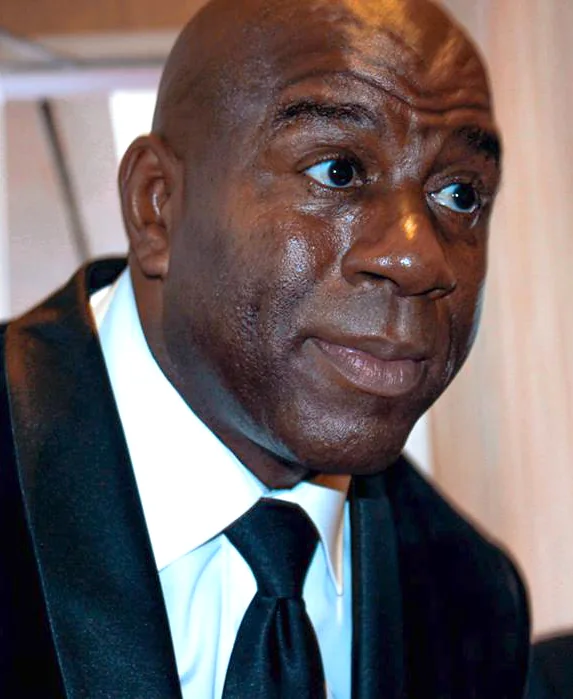

Johnson's fame makes him a frequent focus of ownership stories. To understand the football organization behind the story, keep the recognizable investor's name and the group's leadership title together. Both belong in an accurate description of the transaction.
Buffalo and Atlanta show how ownership groups can grow
An ownership group can add participants without changing the franchise's identity or replacing its principal leader. Buffalo and Atlanta illustrate that distinction through announcements about limited partners. The number joining a particular transaction also needs to be read carefully: it can include people and investment firms from many backgrounds.
Carter, McGrady and Altidore joined the Bills
The Bills' official limited-partner page records approval of new noncontrolling minority interests on December 11, 2024. Vince Carter, Tracy McGrady and Jozy Altidore were among the ten new limited partners. “Ten” describes the full group added in that announcement, not ten Black former athletes.
Carter and McGrady are known for basketball; Altidore is known for soccer. The Bills' account of their introductory comments explained their connections to Toronto and their interest in representation for the next generation. Their involvement connects established careers in other sports with a new role in an NFL organization.
For a Bills fan, the important ownership detail is the team's explicit “noncontrolling” description. The three athletes joined the group; the announcement did not say that one of them replaced Terry Pegula as the club's leader. Their names belong on an ownership list with that role attached.
The Falcons have added limited partners
Atlanta announced approval for four new limited partners on May 21, 2024: Rosalind Brewer, Dominique Dawes, Will Packer and Rashaun Williams. The release identified their interests as limited partnerships, with final closing of the agreements still pending at announcement. It also named Warrick Dunn among the existing limited partners.
The group spans corporate leadership, gymnastics, filmmaking and investment. Those backgrounds help explain why an NFL ownership list can include people who never played professional football. Dunn supplies another path: a former NFL running back who later became an investor in an organization he had represented on the field.
In his team-published interview, Dunn described accepting Arthur Blank's invitation to become a limited partner. That is an ownership role distinct from his earlier playing contract. Retiring from a roster does not automatically create an ownership interest; a separate transaction or agreement does.
These announcements are useful examples of broader participation. They do not establish that every newly added partner has the same stake, the same voting rights or the same daily responsibilities. Those details must come from the specific ownership arrangement, rather than from the number of names in a release.
Venus and Serena Williams have a longstanding Dolphins connection
Venus and Serena Williams entered Miami Dolphins minority ownership in 2009, well before the Broncos' 2022 acquisition and Washington's 2023 sale. Their involvement is a useful reminder that Black participation in NFL ownership did not begin with the most recent celebrity announcement.
Miami's current front-office page lists both sisters as Partners, alongside a separate listing for Stephen Ross as chairman and owner. The team page is helpful for recognizing the present role. The 2009 date answers when their involvement began; those are related but different pieces of information.
The Dolphins also identified Serena as a part-owner in their March 2019 account of the Miami Open's move to Hard Rock Stadium. That provides a football-organization connection beyond an old transaction headline. Her appearance involved tennis at the Dolphins' venue, rather than a playing role on an NFL roster.
Fans should take care with the word “partner” on sports websites. Teams also have commercial partners and sponsors. A company buying stadium advertising is not automatically buying franchise equity. With the Williams sisters, the surrounding club reporting explicitly establishes the ownership context; their presence is not merely a brand on a sponsorship directory.
Nor should you assume that an athlete's retirement from competition ends every business interest. A playing career, a commercial endorsement and an ownership stake are separate relationships. To describe someone's ownership accurately, use the organization's ownership information rather than the athlete's most recent match, appearance or television interview.
The sisters belong among the established examples of Black NFL minority owners. This article does not assign either an exact percentage, a current dollar value or authority to make Dolphins football decisions. The public role is clear without guessing those additional details.
Why buying an NFL team is different from buying a small stake
“Why are there so few Black people controlling NFL teams?” is a different question from “Do any Black people own shares?” The documented minority investments show participation. Explaining access to control requires looking at the size and availability of the transaction, the ownership structure and the approval process.
Capital, available teams and league approval
A control acquisition requires a buyer or group able to finance a very large transaction. In its August 2024 ownership explainer, the NFL described a requirement for the controlling owner to hold 30 percent of the team. That is a different commitment from joining a group through a smaller interest.
There is a broader wealth context as well. Federal Reserve analysis of the 2022 Survey of Consumer Finances documented substantial, persistent racial wealth differences. Those household results describe a population-level pattern. They do not tell us the resources of a particular prospective NFL buyer or explain the outcome of every bid.
The reasonable connection is that a transaction requiring access to enormous capital takes place within a society where wealth is distributed unevenly. It would go beyond that evidence to assume that every unsuccessful bid failed for the same reason, or that a person's race tells us whether that individual could finance a purchase.
Money is also only one part of the process. A club or interest must be available, the seller and prospective buyer must reach an agreement, and league review must follow. Atlanta's 2024 announcement described vetting by the club, league office and Finance Committee before a full ownership vote. A famous athlete's interest in owning a team is not itself a completed acquisition.
Private equity is another category of investor
The NFL's August 2024 framework opened a separate route for approved private equity funds: collectively up to 10 percent of a team, through passive interests without voting power. This framework was designed to provide access to capital while retaining the league's control structure.
A fund investment is different from a named individual becoming a direct limited partner. A firm may have a Black founder, executive or investor, but those facts alone do not establish that every such person personally holds a franchise stake. A careful list should state whether it counts direct team investors, fund interests or both.
For football fans, the practical reading is straightforward: a capital announcement can change who has an economic interest without putting that investor in charge of football decisions. Neither minority participation nor institutional investment, by itself, means the designated controlling owner has changed.
How to read a Black NFL ownership list accurately
These are the documented examples discussed in this guide. The table groups participants by club so you can find a name quickly; it is not a complete count of all Black investors in the league.
| Club | Examples | Ownership context |
|---|---|---|
| Denver Broncos | Mellody Hobson, Condoleezza Rice, Sir Lewis Hamilton | Members of the Walton-Penner ownership group; listed as owners. |
| Washington Commanders | Earvin “Magic” Johnson | Limited partner in the group introduced in 2023. |
| Buffalo Bills | Vince Carter, Tracy McGrady, Jozy Altidore | Noncontrolling limited partners approved in December 2024. |
| Atlanta Falcons | Warrick Dunn, Rosalind Brewer, Dominique Dawes, Will Packer, Rashaun Williams | Established limited-partner example and participants in the 2024 additions. |
| Miami Dolphins | Venus Williams, Serena Williams | Minority owners since 2009; currently listed as partners. |
Why different articles give different counts
First check the date. A list published before Buffalo's December 2024 additions describes a different moment from a later list. Then check the unit being counted: people, clubs, ownership groups and investment funds produce different totals.
Also look at the inclusion rules. One article may count direct individual shareholders; another may include executives at funds that invested in teams. A third may count only controlling owners. Those lists can all discuss NFL ownership while answering different questions. A precise total needs a date, a defined category and a complete underlying list.
Quick answers for football fans
Does Magic Johnson own the Commanders? He is part of their ownership group as a limited partner. Josh Harris was identified as Managing Partner when the group was introduced.
Is Condoleezza Rice a Broncos owner? Yes. Denver lists her as an owner within its group, separately from Greg Penner's controlling-owner and CEO role.
Are Black executives the same as Black owners? No. An executive job does not establish equity ownership. A person can have both relationships, but each needs to be identified.
How many Black NFL owners are there? The answer depends on the date and whether the question includes limited partners and indirect fund participation. This guide gives documented examples rather than claiming a complete current census.
Find the clubs in our NFL teams directory or check the NFL games today schedule when you are ready to follow them on the field.
Cover image: Condoleezza Rice's February 2005 official portrait, United States Department of State, via Wikimedia Commons. Public domain; resized and converted to WebP. The portrait predates her Broncos investment.

Comments