
Kansas City and Carolina are the two teams on bye in 2026 NFL Week 5. Bench their players for this scoring week, fill each affected starting position with someone whose game is still ahead, and keep useful starters for the October 18 return. The Chiefs host the Chargers; the Panthers travel to Philadelphia.
On October 11, the task is a remaining-Sunday lineup repair rather than an early-week draft exercise. This guide helps you choose a legal replacement, avoid an unnecessary drop and notice next week's bye before spending your last bench slot. Player availability, free agents and waiver processing depend on your league; the examples below explain the decision without pretending everyone has the same roster.
Who is on bye in Week 5, and when do they return?
The Carolina Panthers and Kansas City Chiefs have their Week 5 byes in 2026. Neither club plays on Sunday, October 11. Both return on October 18, but their next games have different venues and afternoon windows. Here is the small piece of the calendar you need for their immediate fantasy absence and return.
| Team resting in Week 5 | Week 6 return | Scheduled kickoff, Eastern |
|---|---|---|
| Carolina Panthers | At Philadelphia Eagles, Lincoln Financial Field | Sunday, October 18, 1 p.m. |
| Kansas City Chiefs | Vs. Los Angeles Chargers, Arrowhead Stadium | Sunday, October 18, 4:25 p.m. |
The Panthers' official schedule and Chiefs' schedule show those byes and return games. Their fantasy absence lasts this scoring week; it is not a canceled game waiting for a make-up date. In ordinary weekly leagues, there are no Week 5 game statistics from their players. Custom scoring or special competitions can have different rules, so use your league's own settings.
These are the season's first byes. After four weeks of choosing among active players, your reserve is now only useful if he has a game and fits the position you need. A backup on the same NFL team as your starter may protect against injury during a game, but cannot cover that team's scheduled week off. Check the team column as well as the player's name.
Start by counting the positions affected in your starting lineup. A Chiefs quarterback, a Panthers receiver and a Chiefs team defense create three different jobs. Two extra receivers cannot fill the quarterback or defense slots. The full 2026 bye calendar helps identify collisions elsewhere, while the Week 5 schedule shows the teams still playing.
This guide is framed on October 11 before the remaining Sunday games. The Thursday part of the week has already happened, so players who have locked cannot become fresh starting options. Keep that timing in mind when acting on a recommendation published earlier in the week. A correct football opinion can still be unusable if its transaction window has passed.
Keep the useful player and replace the missing points
A bye temporarily removes the game, not the player's future usefulness. Treat the decision as two questions: who scores for you this week, and whom will you want back in your lineup afterward? A good answer to the first should not casually destroy the second. You can bench a valuable player while making a smaller transaction elsewhere.
Kansas City: cover the position, not the team name
The Chiefs' unofficial depth chart lists Patrick Mahomes at quarterback, Travis Kelce at tight end and Kenneth Walker at running back. Those are distinct roster needs. Noah Gray is another Kansas City tight end, so he cannot provide Week 5 game points in place of Kelce. The same problem applies to a Chiefs backup quarterback or reserve runner.
Walker offers a concrete reminder of why a one-week absence should not determine a season-long decision. His official player page records 87 carries and 537 rushing yards across the first four games. That is actual usage before the bye, not a prediction for the Chargers game. If he is one of your regular starters, cover his RB slot with a player from an active team rather than dropping him simply to make this week's roster easier.
The opposite can be reasonable for a reserve you rarely use. If a limited-role Chiefs player is occupying the last bench place, compare his likely future contribution with a replacement who can start now. The argument for retention should come from role, league depth and scoring, rather than the franchise badge. A dynasty roster and a shallow redraft bench can produce different answers to the same question.
If you have several Chiefs starters, make a separate line for QB, RB and TE before placing claims. A flex addition might fit an RB vacancy after a reshuffle, but it cannot turn into a quarterback. Do not let an attractive overall waiver ranking obscure the position that still has nobody eligible to score.
Carolina: separate receiver depth from quarterback insurance
Carolina's current team depth chart lists Tetairoa McMillan, Jalen Coker and Xavier Legette at receiver, with Bryce Young at quarterback. If one of those receivers normally starts for you, check your existing active receiver depth first. A bench option who already fits the WR slot can cover the absence without forcing a trade or sacrificing another useful reserve.
Young requires a different plan when he occupies your QB slot. Keeping Kenny Pickett as insurance does not solve the bye, because he is also a Panther. In a one-QB format, decide whether an active temporary starter is enough. In a format requiring multiple quarterbacks or permitting a quarterback in superflex, inspect all eligible alternatives before surrendering a starting passer you may need again next week.
The depth chart establishes team and position; it does not guarantee a specific receiving workload after the break. Before the Philadelphia game, check the new practice reports and game status, then compare the returning player with whoever filled in. A healthy return with a useful role is a different situation from an injury that still needs monitoring. Keep enough information to make that distinction without assuming the scheduled rest settles it for you.
How to find a replacement for the games still ahead
On Sunday, your realistic player pool is smaller than an early-week article's list. Start in the league's free-agent screen and filter for the position you need. Check that the player has a game, that it has not started and that the acquisition can finish in time. Then read the latest role and injury information. This sequence avoids spending time comparing players you cannot actually use.
Quarterback and tight end vacancies come first
A mandatory QB or TE slot cannot be covered by an ordinary receiver simply because that receiver projects well. If you need both positions, decide which has fewer usable alternatives in your own league. A deep roster format may leave very few active quarterbacks; a shallow one might offer several. Team count, bench size and other managers' holdings change the answer.
Check processing before choosing your drop. ESPN's acquisition rules include continuous budget waivers, under which an unrostered player still awaits a processing batch. If your next batch is after his kickoff, a Sunday claim cannot solve the current hole. Where immediate additions are allowed, complete the move and inspect the new roster rather than assuming the button press succeeded.
Use multiple alternatives if claims are still due to process, and inspect their order. The first choice might go to another manager; the second should still fill your actual need. Do not submit several unrelated additions that can consume the roster space intended for the position you cannot leave uncovered. Review the proposed drops as carefully as the additions.
Compare opportunities under your scoring rules
Separate a player's chance to touch the ball from the excitement of last week's final score. A reserve running back might score on one carry but have few opportunities afterward. A receiver can run many routes without drawing reliable targets. A tight end can be present for most plays while spending much of that time blocking. Look for evidence of a usable role, then ask what a current injury or lineup change would do to it.
In a full-PPR league, each reception adds a point; in non-PPR it adds none by itself, as ESPN's scoring guide explains. That makes repeated catches valuable even when they are short, although yardage and touchdowns still matter. In half-PPR, the same catch is worth half a point. Check custom bonuses before applying a standard ranking.
If you need a more dependable contribution, favor an evidenced path to several opportunities over a story that requires one spectacular play. If the matchup leaves you needing a larger upside, you may accept more volatility. Either choice is a judgment about the available candidates, not a promise of a minimum score. Avoid treating a popular waiver name as a guaranteed solution without checking his current role.
Match the backup's kickoff to the decision you are waiting on
Philadelphia at Jacksonville in London begins October 11 at 9:30 a.m. ET, according to the Jaguars' official release. Players in that game demand attention before the normal afternoon lineup check. If it has already started when you read this, use an option from a game still ahead.
ESPN's lineup help ties moves to the involved player's scheduled kickoff. A backup from the early window cannot rescue a late starter after the backup locks. Either select the early healthy option before that deadline or preserve a later eligible alternative while waiting for the late injury decision. Make the choice while both paths still exist.
Before kickoff, use specific RB or WR slots for early players when possible, leaving flex open for a later eligible option. Once a player is locked, that flexibility is gone. The remaining Week 5 games provide the calendar; your fantasy app supplies the final roster restrictions and saved-lineup confirmation.
Plan the return game before you use your last bench slot
Kansas City's first game back is at home against the Chargers; Carolina's is on the road against Philadelphia. Those are scheduled games, not certificates that every resting player will be healthy or have his usual workload. Recheck the practice reports and game-day availability before putting someone back in a starting slot. A player you held through the bye can remain worth holding without becoming an automatic start.
A home or away label alone does not settle a fantasy decision either. Think about the position you are filling, the expected role and the alternatives on your roster. A receiver with a dependable place in the offense may remain useful in a difficult team matchup. A low-volume reserve does not become dependable merely because his club is coming off extra rest.
Carolina's official 2026 calendar has a home game against Tampa Bay on October 25 after the Philadelphia trip. That gives you another checkpoint for a player whose return or role remains uncertain. Do not commit your last bench space to a two-week hold unless you can still cover the lineup you must submit this week.

Check the Week 6 bye on every short-term addition
Week 6 rests Cincinnati, Detroit, Miami and Minnesota. A player from one of those clubs can help this Sunday, but he cannot provide next week's normal game points. That is fine if your original starter returns and you intend to release the fill-in. It is a problem if you are also trying to bridge an injury that might last longer.
Compare the total job you need done. For a single Week 5 hole, immediate usability may matter more than a future matchup. For two consecutive vacancies, an active player in both weeks can save another transaction and preserve your acquisition budget. Neither choice is automatically correct: a longer hold must still have an actual role and enough value to justify the bench space.
Write down the drop you would make after the original starter returns. If every possible drop is a player you strongly want to keep, the new addition carries a larger cost than its waiver price suggests. Check the Week 6 schedule before finalizing that plan. A printable schedule also makes it easier to mark the next vacancy beside each reserve rather than discovering it on another Sunday morning.
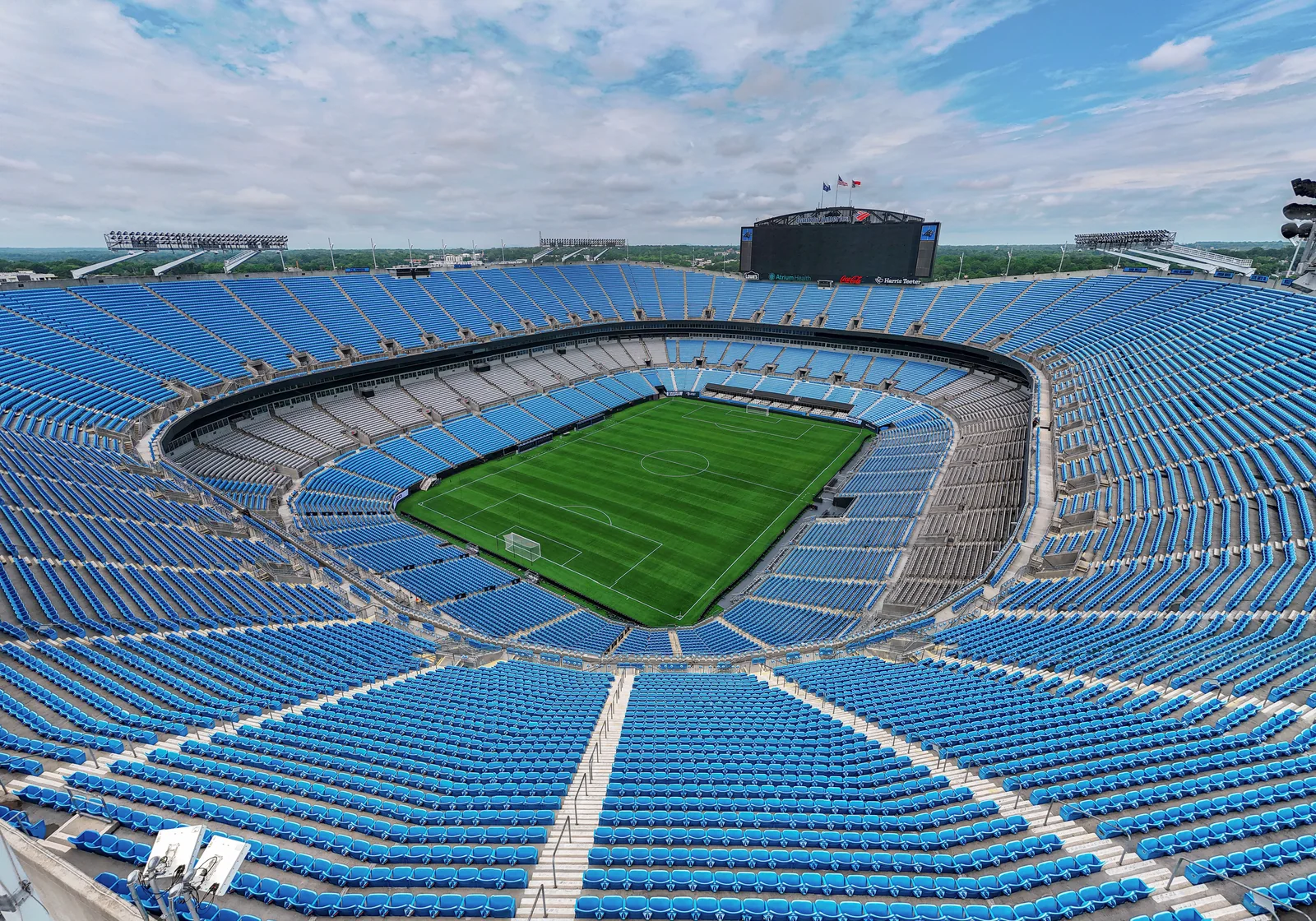
Cover photograph credit: archival aerial view of Arrowhead Stadium, August 31, 2013, Ichabod, Wikimedia Commons, CC BY-SA 3.0; resized and converted to WebP.

Two roster situations that need different Week 5 moves
Consider a hypothetical one-quarterback roster with Mahomes and McMillan usually starting. Both are on bye. The bench already holds an active quarterback and an active receiver, and both replacement games are still ahead. You have two vacancies and two eligible replacements. Moving them into the lineup can solve the immediate problem without an addition, even if neither feels as exciting as the player he replaces.
The next question is whether those replacements are reasonable choices among your actual alternatives. Compare their current availability and roles with the free-agent pool. If the pool offers little improvement, saving an acquisition and retaining the bench can make sense. If the backup quarterback has become unavailable, the situation changes: you now need another eligible quarterback, even though the receiver vacancy remains covered.
Do not let the total number of reserves hide that distinction. Three healthy receivers do not fill a mandatory quarterback slot. Conversely, a manager who can cover both holes already does not need to make a transaction simply because it is the first bye week. The useful measure is a complete legal lineup, followed by how much a potential addition improves it.
Now consider a hypothetical superflex roster in which Mahomes is on bye and a second quarterback is unavailable with an injury. Only one quarterback on the roster can play. Put him in the mandatory QB slot. If this league's superflex accepts a running back, receiver or tight end, an active player from one of those positions can cover that separate slot. Check the eligibility displayed by the app before relying on it.
Suppose that same roster also lacks an active tight end. A receiver who solves superflex still cannot solve the mandatory TE vacancy. You must find an eligible tight end or reconsider the roster arrangement. If only one bench place can be released, identify the player you would miss least over the next few weeks, rather than dropping the first bye player visible on the screen. The right answer depends on expected use, replacement options and league depth.
These are examples of position coverage, not recommendations to abandon a particular player. A deep two-QB league can make even a reserve quarterback costly to replace. A shallow one-QB league can leave several alternatives available. A player's usefulness on your roster depends on that context as well as his NFL role.
Finish with four practical checks before the remaining kickoffs:
- Every intended starter has a Week 5 game and is currently available.
- Each player occupies an eligible position, including any flex restrictions.
- Any pending acquisition will finish before the player's game locks.
- The saved lineup shows the players you chose, rather than an unconfirmed proposed move.
The first two byes do not require a major roster overhaul. They require an honest look at the positions that are empty this Sunday and a replacement plan you can actually complete. Keep the players whose future contribution warrants their place, cover the available games and leave yourself a clear decision when Kansas City and Carolina return.
Comments